Showing posts with label Streaming. Show all posts

Netgear Digital Entertainer Elite: HTPC In a Set Top Box [Htpc]


Compliments of the FCC, we're getting an early look at Netgear's beefy yet practical response to the typical home theater PC. The Netgear digital Entertainer Elite, expected to be officially announced at CES, is a set top box that may lack a tuner but happens to stream every format you could want at encoding rates up to 40Mbps (Blu-ray territory) over ethernet or its integrated Wireless-N adapter. Playing 1080P video over HDMI, plus packing component, optical and SCART outputs, the Digital Entertainer can also be expanded to move beyond streaming with any 3.5-inch internal SATA drive you like.


The catch, of course, could be the price. But we probably won't know about that point for another month. Until then, we'll admit that our interest is piqued. What would you pay for this sleek HTPC light? [Via: Gizmodo, The Gadget Blog ]

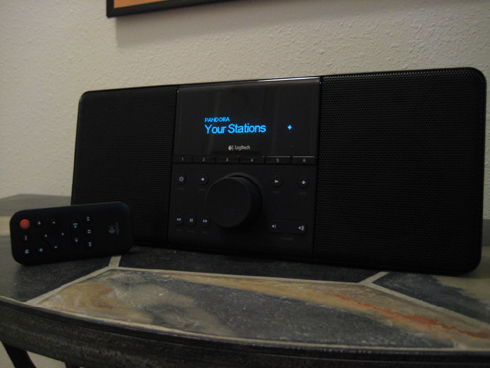
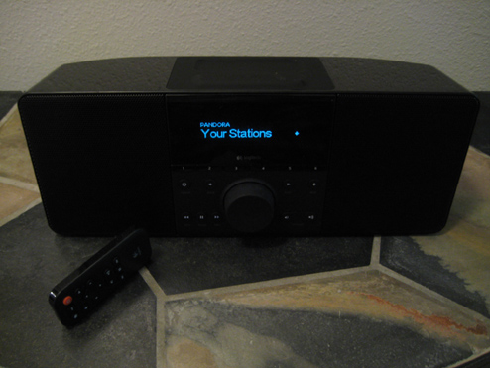
Lightning Review: Logitech's Squeezebox Boom All-in-One Network Audio Player [Review]


The Gadget: The Squeezebox Boom from Logitech streams music from your PC or the internet via an 802.11b/g or Ethernet connection. Unlike previous Squeezeboxes, the Boom also throws in a pair of 30-watt speakers.

The Price: $300 The Verdict: This is one awesome little Wi-Fi radio. It is super-compact, versatile, set-up was nearly effortless and it sounds great. The device can handle just about any non-DRM format including MP3, FLAC, WMA, WMA Lossless, AAC, Apple Lossless, WAV, and AIFF and it accessed music seamlessly from my iTunes account thanks to the SqueezeCenter software (works with Windows, Mac and Linux). The device integrates with Logitec's SqueezeNetwork to tap into internet radio and manage subscriptions from Pandora, Rhapsody, Sirius, Last.fm, Slacker, MP3tunes, RadioTime, Radio IO and Live365. Again, setting up an account and integrating the service with the Squeezebox itself was easy, and navigating between all of the options wasn't too much of a problem using the remote and the simplified display (although the fact that you can only view one menu option at a time can be a bit frustrating). The sleek design also had a couple nice extras, like a magnetized remote that can be stuck to the top of the unit—or to your fridge if you prefer. It also has an alarm clock function and an auto-dimming display that automatically adjusts to the ambient light. As mentioned earlier, I was surprised at how well the Squeezebox Boom sounds. I didn't notice any major artifacts or distortion and it handles bass-heavy songs superbly—cranking out a crisp, heavy sound. Very impressive for Wi-Fi. The bottom line is that there isn't much to complain about with the Squeezebox Boom. I mean, it beats the hell out of an iPod dock, that's for sure. The UI could have been a bit better and it may be a bit pricey for some at $300, but all in all this is a great little machine. [Logitech]
[Via: Gizmodo, The Gadget Blog ] [Tag: ]

Sony, Sharp, Hitachi, Samsung and Motorola Agree on Amimom Whole-House Wireless HD Standard [Wireless HDMI]


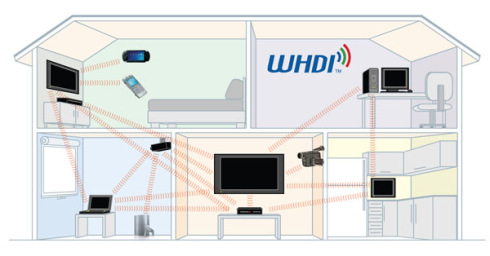
Be happy: A new wireless HD video standard guarantees that major brands including Sony, Sharp, Hitachi, Samsung and Motorola will have interoperable wireless video streaming. Amimom—the chip makers behind the "video modem" wireless HD tech we've been seeing on and off for the last few years, and most recently in Belkin's Flywire—is announcing the WHDI consortium with the above members, formed to standardize their wireless HD spec and embed it in member companies' TVs, projectors and HD video sources. The result is a network of HD components, streaming uncompressed 1080p video not just through one room like competing UWB standards, but to and from any source to any TV in your entire home, with a range comparable to Wi-Fi. Pretty impressive stuff. The change in range is due to the chunk of spectrum being used (5GHz for WHDI and anywhere from 3.1 to 10.6 GHz for UWB). UWB is a low-power, short-range broadcast because it has to play nice with the other protocols found on the wide breadth of spectrum it calls home. (For better or worse, Monster's wireless HD kit is wireless up until the point it needs to use your home's coax wiring to gain whole-house coverage). WHDI, however, is camped out in a chunk of unlicensed 5GHz spectrum just like 802.11n Wi-Fi, meaning it must be able to tolerate the reasonable levels of interference only from other devices that use the same frequencies, and can broadcast at higher power levels than UWB—enough for a range of "over 100 feet." WirelessHD, a third major spec also funded by Samsung and Sony, plus Panasonic, Toshiba, LG and NEC, uses the 60GHz band, and apparently has problems unless the transmitter and receiver are within line-of-sight. Components will be paired through menu systems using a pass-key, like Bluetooth. The spectrum can hold around six streams of 1080p video at a time, although real-world interference may vary. A likely scenario would be streaming from a WHDI cable box or Blu-ray player downstairs to 3 TVs throughout your house while still having room for HD gaming in the den. The fact that a few heavies like Panasonic are still notably missing could mean another standards battle is on the horizon. While WirelessHD already claims a published 1.0 spec, and Monster's UWB product should be out by the fall, the WHDI spec is due to be finalized at the end of the year, with products hopefully popping up in time for CES '09. Stay tuned until then—as one format war ends, another begins.

[Via: Gizmodo, The Gadget Blog ]
[Tag: ]

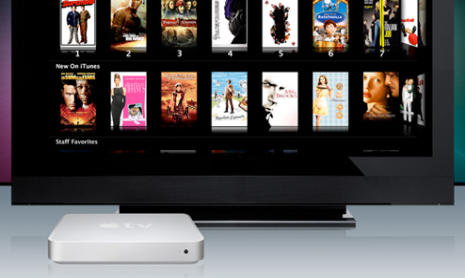
Buy Movies Directly on Apple TV (No Computer Required)


Following up Apple's same-day DVD release purchasing announcement, they've added a feature to buy movies directly on Apple TV without the need for a computer. Before this, you could only rent on your Apple TV and have to buy movies on your computer first, then stream it. [MacRumors]

[Via: Gizmodo, The Gadget Blog ]
[Tag: ]